
Why Nagasaki Has Such Deep Historical Ties with China
Nagasaki developed as Japan’s primary gateway to China, shaping the city’s population, architecture, religion, and culture. From Chinese-built bridges and temples to cuisine and community life, this legacy remains deeply embedded in Nagasaki today.
HISTORY OF NAGASAKI
1/23/20264 min read
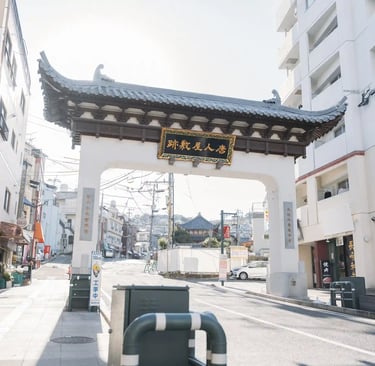
To understand the unique character of Nagasaki, it is essential to understand its deep and long-standing relationship with China. More than just a port city, Nagasaki functioned for centuries as Japan’s primary gateway to Chinese people, goods, and culture. This connection shaped the city’s history, architecture, religion, and everyday life in ways that are still visible today.
Nagasaki as Japan’s Gateway to China during the Edo Period
During the Edo period, Japan strictly limited contact with foreign countries. However, trade with China was continuously permitted through Nagasaki. Chinese merchants regularly visited the port, bringing silk, porcelain, medicines, books, and cultural knowledge, while Japan exported silver and copper in return.
As a result, a significant Chinese population settled in the city. Historical records suggest that by the late 17th century, people of Chinese origin made up approximately one-sixth of Nagasaki’s population. For a Japanese city of that era, this level of international presence was extraordinary and highlights Nagasaki’s role as a truly global city long before modern times.
Megane Bridge: A Chinese Legacy in Stone
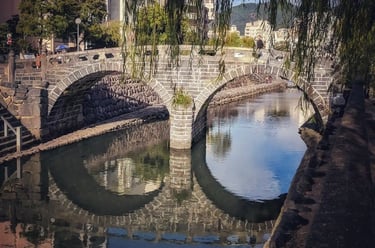
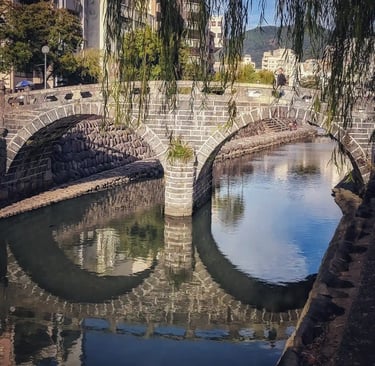
One of Nagasaki’s most iconic landmarks, Megane Bridge, offers a clear example of Chinese influence on the city’s landscape. Built in the 17th century, it is considered one of the oldest stone arch bridges in Japan.
The bridge is traditionally associated with Mokusunyoujo, a monk of Chinese origin connected to Kōfuku-ji Temple. Its elegant stone arches reflect Chinese bridge-building techniques, and when the arches are mirrored in the river below, they resemble a pair of spectacles—hence the name “Megane,” meaning glasses. The bridge stands as a lasting symbol of Chinese craftsmanship in Nagasaki.
Chinese Temples and Community Life
Nagasaki is home to several temples known as Tōdera, or “Chinese temples,” which were built specifically for the Chinese community.
Kofukuji Temple is regarded as the oldest Chinese temple in Japan. It served as a spiritual and cultural center for Chinese residents, where prayers and ceremonies were conducted in Chinese and traditional customs were preserved.
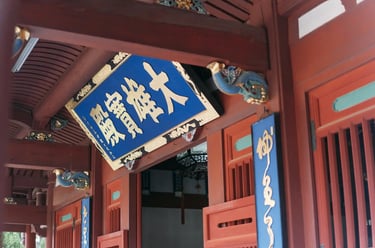
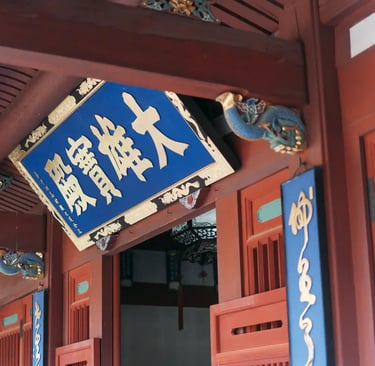
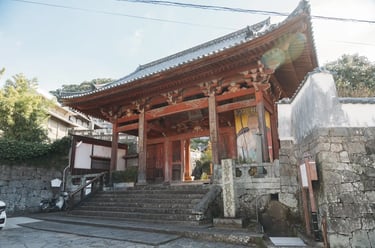
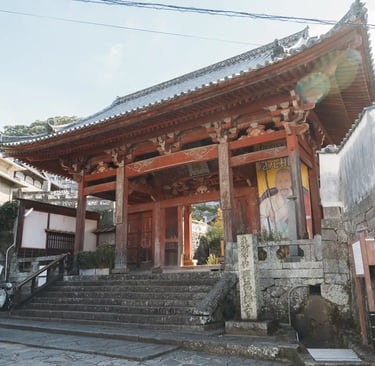
Another important site is Sofukuji Temple, founded in 1629 by people from China’s Fujian Province. Its architecture reflects Ming dynasty design, setting it apart from typical Japanese Buddhist temples. These temples were not merely religious spaces but also vital hubs that sustained Chinese identity and community life in Nagasaki.
The Chinese Residential Quarter
To manage the growing Chinese population, the city established a designated residential area known as the Chinese Quarter, or Tōjin-yashiki. Within this area, Chinese residents lived, worshiped, and conducted business, maintaining their language, customs, and traditions while interacting daily with Japanese society. This coexistence played a key role in shaping Nagasaki’s distinctive international atmosphere.
Chinese Influence on Nagasaki’s Food Culture
The influence of China is also deeply embedded in Nagasaki’s cuisine. Local specialties such as champon and sara-udon trace their origins to Chinese cooking but were adapted over time to suit Japanese tastes. Today, these dishes are celebrated as uniquely Nagasaki-style comfort foods.
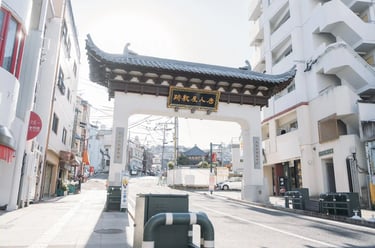
Nagasaki Shinchi Chinatown, one of Japan’s three major Chinatowns, stands as a living reminder of the city’s long Chinese heritage and continues to be a vibrant cultural and culinary destination.
Where Chinese Culture Became Nagasaki Culture
What makes Nagasaki truly unique is not simply that it absorbed Chinese culture, but that it transformed it. Chinese architecture, religion, food, and customs blended naturally with Japanese traditions, evolving into something distinctively Nagasaki.
This cultural fusion did not erase Chinese influence; instead, it preserved and reshaped it, allowing it to become an integral part of the city’s identity.
Conclusion
Nagasaki is one of the few places in Japan where the historical relationship with China can still be experienced so vividly. Walking across Megane Bridge or visiting temples like Sofuku-ji and Kōfuku-ji offers a tangible connection to a time when Nagasaki stood at the crossroads of East Asia.
Exploring Nagasaki today is not only a journey through Japanese history, but also a journey through centuries of exchange, cooperation, and cultural blending between Japan and China.
Nagasaki Private Tours — Private Tours, Private Guides & Customizable Shore Excursions
If you are planning a Nagasaki tour and are looking for a knowledgeable private guide, Nagasaki Private Tours offers flexible and stress-free experiences tailored to your interests.
We specialize in private guided tours in Nagasaki and fully customizable shore excursions for cruise passengers, designed to match your schedule, pace, and preferences. Our tours range from carefully crafted model itineraries to completely personalized private tours.
You may explore Nagasaki comfortably by private car with a dedicated driver, or enjoy the city like a local using its historic streetcars. Whether you are visiting Nagasaki on a cruise ship or staying in the city, our experienced local guides will ensure a meaningful and memorable experience.
Learn more about our Nagasaki private tours or make a reservation here:
https://nagasakiprivatetours.com