
Thomas Glover’s Legacy
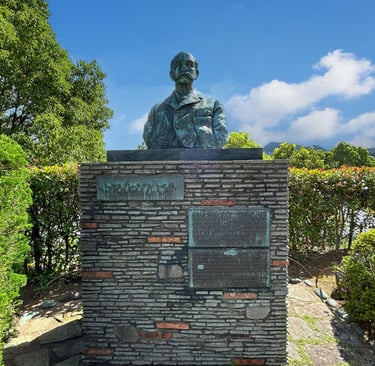
Thomas Blake Glover was a Scottish merchant who played a key role in Japan’s modernization by introducing Western technology and supporting industrial and political change from within Japanese society. His life and legacy symbolize Nagasaki’s historical role as Japan’s gateway to the world and a bridge between cultures during a time of national transformation.
HISTORY OF NAGASAKI
12/17/20253 min read


When speaking about the history of Nagasaki, one name inevitably stands out: Thomas Blake Glover.
During the turbulent years from the end of the Edo period to the dawn of the Meiji era, Japan underwent dramatic change. At the center of this transformation stood a foreign merchant who supported Japan’s modernization not through politics, but through practical action. Glover’s life story is inseparable from Nagasaki’s role as Japan’s gateway to the world.
Arrival in Nagasaki in 1859: A 21-Year-Old at the Crossroads of History
Thomas Glover was born in Scotland in 1838. In 1859, at just 21 years old, he arrived in Nagasaki.
This was the very year Japan opened key ports such as Nagasaki and Yokohama, bringing an end to more than 200 years of national isolation. Surrounded by expanding Western powers in Asia, Japan was suddenly thrust onto the global stage and forced to modernize rapidly.
Glover came to Nagasaki as a representative of Jardine Matheson, a major British trading company. However, he quickly became more than a company agent. He closely observed Japanese society and developed a deep interest in the country’s future at a time when it stood on the brink of transformation.
Supporting Japan’s Modernization on the Ground
Glover’s greatest contribution was not political influence, but hands-on involvement in Japan’s modernization.
He introduced steam engines, shipbuilding technology, machinery, and weapons from the West. He built close relationships with the Satsuma and Choshu domains, which would later become central forces behind the Meiji Restoration.
Rather than acting as a simple arms dealer, Glover understood what Japan needed to survive as a modern nation. His actions reflected a long-term vision rather than short-term profit.
He was also deeply involved in the development of the Takashima coal mine. Coal was a vital resource supporting shipbuilding, steel production, and railways, and Glover’s involvement helped lay the foundation for Japan’s modern industrial economy.
A Foreigner Who Put Down Roots in Japan
Glover was not a foreigner who merely passed through Japan. He built a family with a Japanese woman and lived deeply within Japanese society.
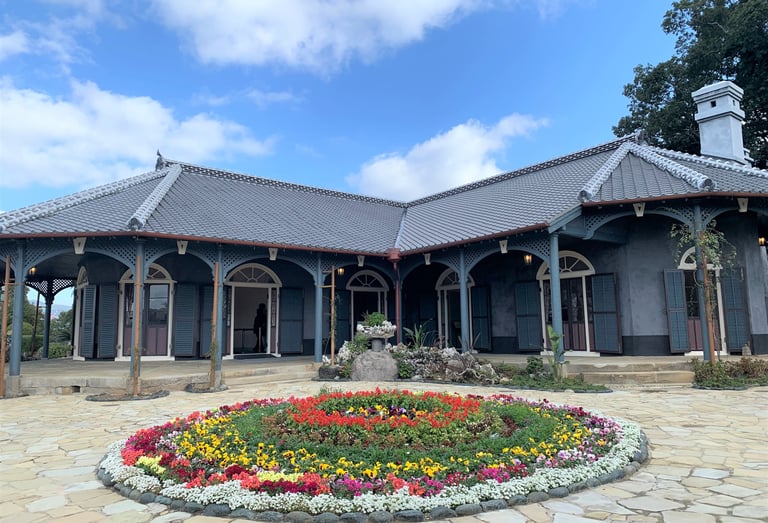
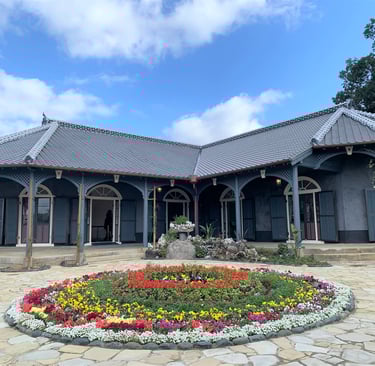
His former residence in Minamiyamate, now part of Glover Garden, remains one of Nagasaki’s most iconic landmarks. From this hillside home, Glover overlooked Nagasaki Harbor, a place where people, goods, and ideas flowed between Japan and the world.
This view symbolized the era he lived in: a Japan opening its doors to global exchange while redefining its identity.
Later Years and Posthumous Recognition
As Japan entered the Meiji period, rapid social and economic changes brought challenges to Glover’s business ventures. He faced financial hardship, yet continued to contribute behind the scenes by sharing his experience and knowledge with Japan’s growing industrial sector, including his later association with Mitsubishi.
Glover passed away in 1911 in Tokyo. Notably, his grave is located in Nagasaki’s Sakamoto International Cemetery, a quiet testament to the city he considered his second home.
Recognition of His Legacy
After his death, Glover’s contributions were increasingly recognized. In 2015, industrial sites connected to him, including coal mining and shipbuilding facilities, were registered as part of the UNESCO World Heritage listing Sites of Japan’s Meiji Industrial Revolution.
This recognition acknowledged that Japan’s modernization was achieved not only by Japanese leaders, but also through collaboration with foreign individuals who worked alongside the nation during its transformation.
Conclusion: Glover and the Spirit of Nagasaki
Arriving in Japan at the age of 21, Thomas Glover chose not to stand apart from the country’s change, but to take part in it.
He did not reshape Japan from the outside. He lived within it, walked beside it, and helped build its future.
Standing in Glover Garden today and gazing out over Nagasaki Harbor, it is easy to imagine the Japan he once saw: a nation in motion, a city open to the world, and a future full of possibility.
Nagasaki Private Tours — Private Tours and Customizable Shore Excursions
If you are planning to visit Nagasaki and would like a private, flexible, and stress-free experience, we would be happy to help.
At Nagasaki Private Tours, we offer carefully designed model itineraries as well as customizable private tours — with the option to travel comfortably by private car or experience the city like a local on its historic streetcars, whether you are visiting by cruise ship or staying in the city.
Learn more or make a reservation here:
https://nagasakiprivatetours.com