
Setsubun: A Traditional Japanese Festival to Welcome Spring
Setsubun is a traditional Japanese event held in early February to drive away bad luck and welcome a new season. It reflects Japan’s deep respect for seasonal change and the wish for health and happiness in the year ahead.
JAPANESE CULTURE
1/31/20262 min read
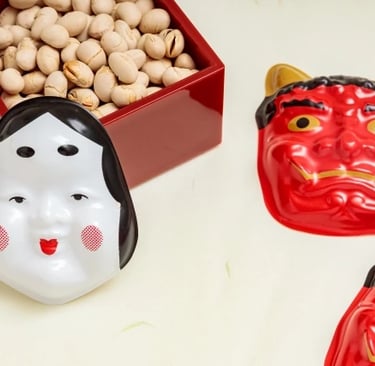
Setsubun is one of Japan’s traditional annual events and is usually celebrated around February 3rd. The word Setsubun literally means “the division of seasons,” and it originally referred to the day before the start of each new season. Today, however, Setsubun is mainly associated with the day before Risshun, the beginning of spring in the traditional Japanese calendar.
The origins of Setsubun date back over a thousand years to the Heian period (around the 9th century). At that time, a ritual called Tsuina or Oni-yarai was performed at the imperial court. This ceremony was influenced by ancient Chinese beliefs and was intended to drive away evil spirits, diseases, and misfortune. Over time, the ritual spread among the general population and evolved into the Setsubun traditions we know today.
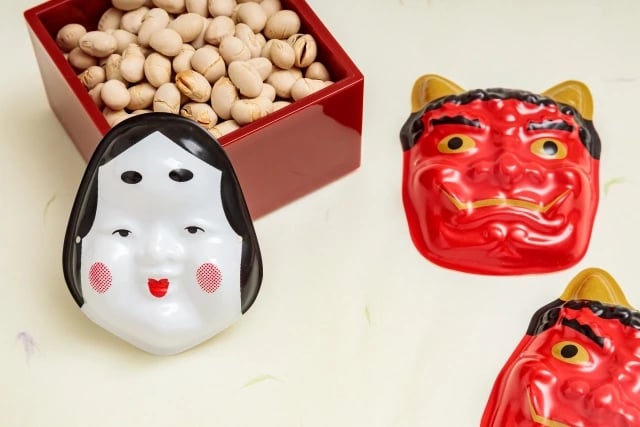
The most well-known custom of Setsubun is mamemaki, or bean throwing. Roasted soybeans are thrown while chanting “Oni wa soto, fuku wa uchi” (“Demons out, good fortune in”). The beans symbolize the power to purify and protect the home by driving away negative energy. There is also a wordplay in Japanese, as mame can be associated with destroying evil spirits. After throwing the beans, people traditionally eat the number of beans equal to their age plus one, wishing for good health throughout the coming year.
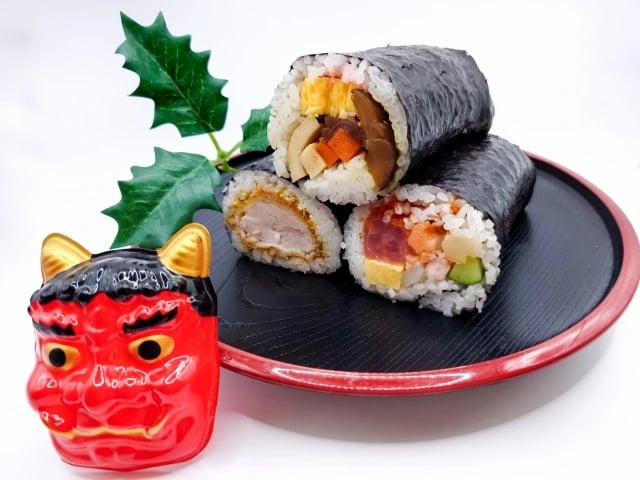
In recent decades, another Setsubun custom has become popular across Japan: eating ehomaki, a thick sushi roll. People eat the roll in silence while facing the year’s lucky direction, believing it will bring good fortune. This practice originated in the Kansai region but is now widely enjoyed throughout the country.
So, is there anything unique about Setsubun in Nagasaki?
Unlike major cities such as Kyoto or Tokyo, Nagasaki does not host large-scale Setsubun festivals. Instead, the event is celebrated more quietly at local temples, shrines, and within families. Nagasaki has a unique cultural background shaped by centuries of international exchange and the coexistence of Buddhism, Shintoism, and Christianity. As a result, Setsubun here tends to be a modest, community-centered occasion rather than a grand spectacle.
For many people in Nagasaki, Setsubun is a meaningful moment to reflect on the past year, cleanse the spirit, and prepare for the arrival of spring. It represents not only a cultural tradition but also a way of resetting both mind and body in harmony with nature.
In Japan, seasonal transitions have always been an important part of daily life. Setsubun reminds us that welcoming change with gratitude and intention is a deeply rooted value in Japanese culture.
About Us
Nagasaki Private Tours Co., Ltd. specializes in private, English-guided tours designed for international travelers and cruise passengers visiting Nagasaki. We offer carefully curated experiences that highlight the city’s history, culture, and local traditions, including exclusive cultural activities not available elsewhere in Nagasaki.
Learn more about our private tours here:
👉 https://nagasakiprivatetours.com