
Nagasaki’s Industries: A City Shaped by History, Trade, and Innovation
Nagasaki’s economy has been shaped by its long history as Japan’s gateway to the world, developing through shipbuilding, international trade, fisheries, and tourism. Today, these traditional strengths are complemented by emerging industries such as renewable energy, IT, and innovation-driven tourism, shaping the city’s future.
HISTORY OF NAGASAKI
12/13/20252 min read
Nagasaki is a city with a uniquely diverse industrial history in Japan.
For centuries, it has served as a gateway between Japan and the rest of the world, and its industries have evolved alongside its international connections.
This article introduces Nagasaki’s key industries from both historical and modern perspectives.
1. Shipbuilding: The Foundation of Nagasaki’s Economy
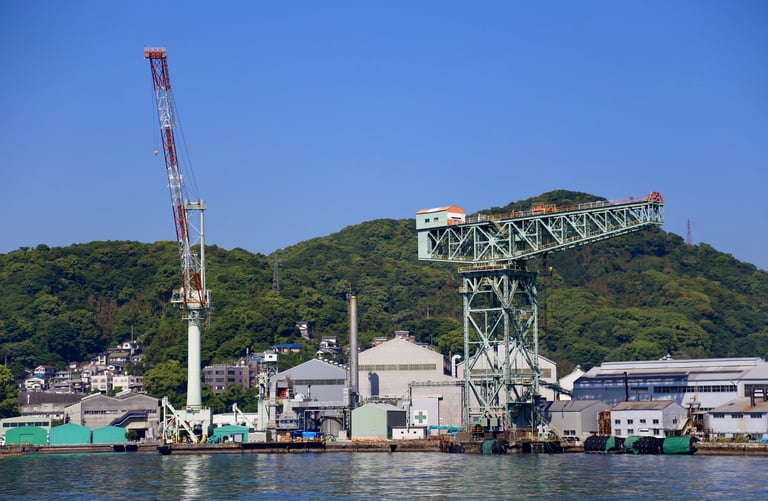
Shipbuilding is one of Nagasaki’s most important traditional industries.
From the late Edo period through the Meiji era, Nagasaki became a center of modern shipbuilding, supporting Japan’s industrialization.
Today, facilities such as Mitsubishi Heavy Industries’ Nagasaki Shipyard continue to play a vital role, producing not only ships but also advanced industrial and energy-related equipment.
Shipbuilding has also supported many related sectors, including machinery, metal processing, and logistics.
2. Trade and Commerce Rooted in International Exchange
During Japan’s period of national isolation, Nagasaki was the country’s only official port open to foreign trade through Dejima.
This history fostered a strong spirit of openness and adaptability that still influences Nagasaki’s commercial and service industries today.
As a result, Nagasaki is known for:
Cultural diversity
International-minded hospitality
A unique blend of Western, Chinese, and Japanese traditions
These qualities continue to support tourism and international business.
3. Tourism: An Industry of History and Peace
Tourism is now one of Nagasaki’s most significant industries.
The city offers historical and cultural sites found nowhere else in Japan, including:
Peace Park and the Atomic Bomb Museum
Dejima and Glover Garden
Historic churches and Christian heritage
Harbor views and world-famous night scenery
In recent years, Nagasaki has also become a popular cruise ship destination, increasing demand for half-day tours, shore excursions, and private guided experiences.
4. Fisheries and Food Processing: Industries Supported by the Sea
Nagasaki Prefecture is one of Japan’s leading fishing regions.
Fishing and seafood processing have long supported the local economy.
Key products include:
Processed seafood
Fish cakes and surimi products
Dried and frozen seafood
These industries remain an essential part of Nagasaki’s identity and economy.
5. Emerging Industries and Future Initiatives
In addition to its traditional industries, Nagasaki is investing in new fields, such as:
Renewable energy
IT and digital industries
Startup support programs
Tourism combined with technology
Despite challenges such as population decline, Nagasaki continues to build on its strengths in history, technology, and international exchange.
Conclusion
Nagasaki’s industries have evolved through trade, shipbuilding, tourism, and innovation.
At the heart of this evolution lies the city’s ability to welcome and integrate cultures from around the world.
This unique character continues to shape Nagasaki’s economy today and will play a key role in its future development.
Nagasaki Private Tours — Private Tours and Customizable Shore Excursions
If you are planning to visit Nagasaki and would like a private, flexible, and stress-free experience, we would be happy to help.
At Nagasaki Private Tours, we offer carefully designed model itineraries as well as customizable private tours — with the option to travel comfortably by private car or experience the city like a local on its historic streetcars, whether you are visiting by cruise ship or staying in the city.
Learn more or make a reservation here:
https://nagasakiprivatetours.com