
Nagasaki: Japan’s Gateway to the World and a City of Contrasts
Nagasaki is a city uniquely shaped by foreign trade, Christianity, and direct shogunate rule, serving as Japan’s only gateway to the outside world during the period of national isolation. Its layered history of openness and suppression has created a distinctive cultural identity that continues to define Nagasaki today.
HISTORY OF NAGASAKI
10/31/20253 min read
Nagasaki: Japan’s Gateway to the World and a City of Contrasts
Nagasaki has long occupied a unique and powerful position in Japanese history. During the Edo period, the city belonged administratively to Hizen Province, yet its governance was fundamentally different from most other regions. Instead of being ruled by a feudal lord, Nagasaki was placed under the direct control of the Tokugawa Shogunate as a tenryō, or shogunate-controlled territory.
This exceptional status reflected Nagasaki’s strategic importance. The city was not only a key center for foreign trade but also a focal point for managing religious influence, particularly Christianity. Few cities in Japan were so closely tied to both international exchange and political oversight.
Nagasaki During Sakoku: Japan’s Only Window to the Outside World
From the early 17th to the mid-19th century, Japan adopted a policy of national isolation known as sakoku. During this time, almost all foreign contact was prohibited. Remarkably, Nagasaki was the sole exception.
Trade with the outside world was strictly limited to Dutch and Chinese merchants, who were confined to the small artificial island of Dejima in Nagasaki Bay. Although the scale of this exchange was tightly controlled, its impact was profound.
Through Dejima, Western science, medicine, astronomy, cartography, and technology entered Japan. This knowledge, later known as Rangaku (Dutch Studies), played a crucial role in shaping Japan’s modernization. As a result, Nagasaki became Japan’s intellectual gateway to the West, quietly influencing the nation while remaining physically isolated.
Christianity and the Birth of the Hidden Christians
Nagasaki’s global connections also made it central to the history of Christianity in Japan. When Portuguese missionaries arrived in the 16th century, Christianity spread rapidly throughout Kyushu, and Nagasaki emerged as one of its strongest centers.
However, under the Tokugawa government, Christianity was soon perceived as a political and ideological threat. The religion was banned, and believers were subjected to severe persecution. Many were forced to renounce their faith, while others chose a different path — practicing Christianity in secret.
These believers became known as the Hidden Christians (Kakure Kirishitan). For over two centuries, they preserved their faith underground, disguising Christian prayers as Buddhist chants and transforming images of the Virgin Mary into figures resembling Kannon, the Buddhist goddess of mercy. Their survival stands as one of the most remarkable examples of spiritual resilience in Japanese history.
A City Shaped by Contrasts
What makes Nagasaki truly distinctive is the way opposing forces coexist within the city. Foreign influence and Japanese tradition, religious faith and political suppression, openness and isolation — all are deeply woven into Nagasaki’s identity.
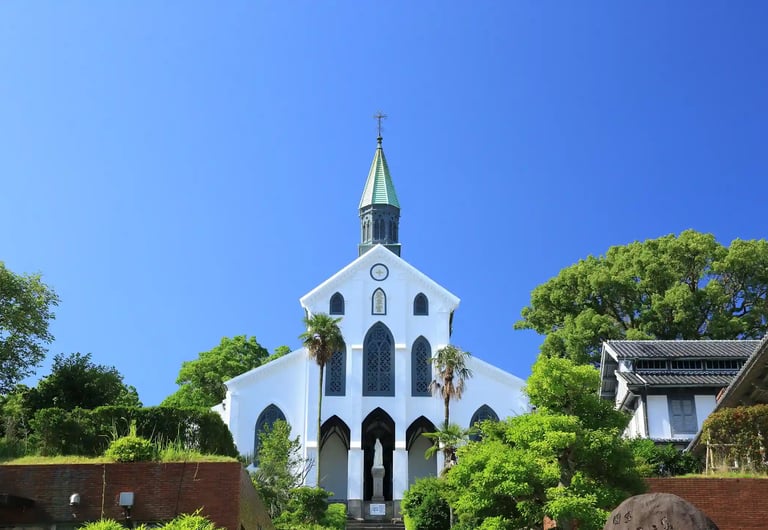
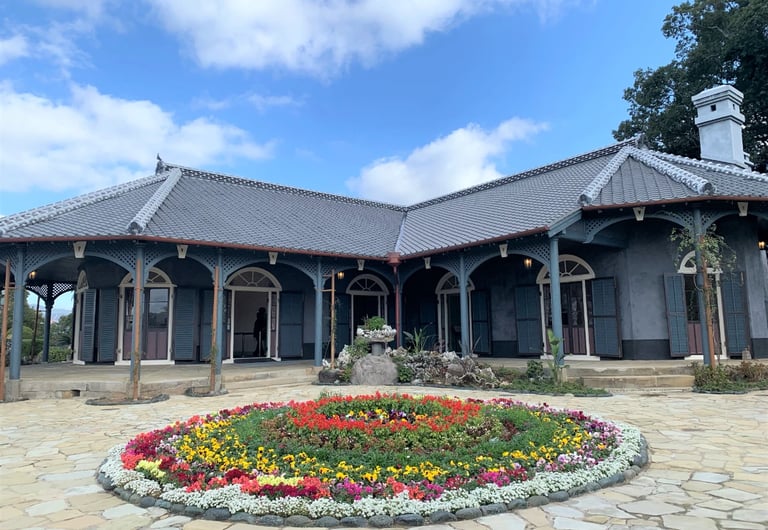
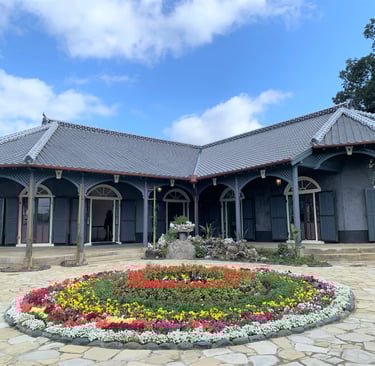
Walking through Nagasaki today, traces of these layered histories remain visible. Western-style buildings stand alongside traditional temples. Christian churches rise near Shinto shrines. The atmosphere is neither fully Japanese nor entirely foreign, but something uniquely its own.
Nagasaki’s Enduring Legacy
Nagasaki is not just a city with a past; it is a living archive of Japan’s encounters with the world. Its role as Japan’s only international port during isolation, its connection to Christianity and persecution, and its openness to foreign knowledge have all shaped the nation in lasting ways.
Even today, the spirit of Nagasaki lingers in its streets, architecture, and culture — a quiet reminder that history is not only preserved in books, but also in the places where people once lived, believed, and endured.
Discover Nagasaki’s History with a Local Guide
Nagasaki’s history is complex, emotional, and deeply connected to the world beyond Japan. To truly understand its stories — from foreign trade and hidden faith to cultural exchange — exploring the city with a knowledgeable local guide makes all the difference.
Nagasaki Private Tours offers private, carefully curated tours that reveal the deeper layers of Nagasaki’s past at a comfortable pace.
Learn more about our tours here:
https://nagasakiprivatetours.com