
Faith in the Shadows: The Hidden Christians of Japan
For more than 250 years, Japanese Christians secretly preserved their faith under severe persecution. This is the story of how Nagasaki and the Goto Islands became sanctuaries of belief, resilience, and quiet resistance.
HISTORY OF NAGASAKI
2/4/20263 min read
The Arrival of Christianity in Japan
Christianity was first introduced to Japan in 1549, when the Jesuit missionary Francis Xavier arrived in Kagoshima.
At that time, Japan was in the Sengoku period, an era of political fragmentation and active contact with foreign traders. Many local lords were interested in Western technology and trade, which helped Christianity spread relatively quickly, especially in Kyushu. Churches were built, and many people, including samurai and commoners, converted to Christianity.
Nagasaki soon became one of the most important centers of Christianity in Japan, developing as a port city closely connected to Europe.
The Ban on Christianity and the Beginning of Persecution
As Japan moved toward unification, the government began to view Christianity as a potential threat to political stability and social order.
In 1614, the Tokugawa shogunate officially banned Christianity. Missionaries were expelled, churches were destroyed, and believers were forced to renounce their faith. Those who refused faced imprisonment, torture, or execution.
One of the most well-known events of this persecution was the martyrdom of the Twenty-Six Christians in Nagasaki in 1597. From this point on, Christianity went underground.
The Birth of the Hidden Christians
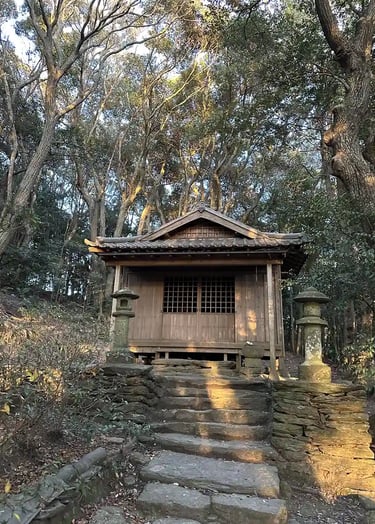
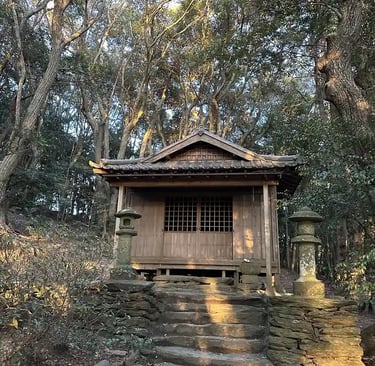
After the ban, many Christians outwardly converted to Buddhism or Shinto in order to survive. However, some chose to secretly preserve their faith. These people became known as the Hidden Christians.
To avoid detection, they adapted their practices in creative ways:
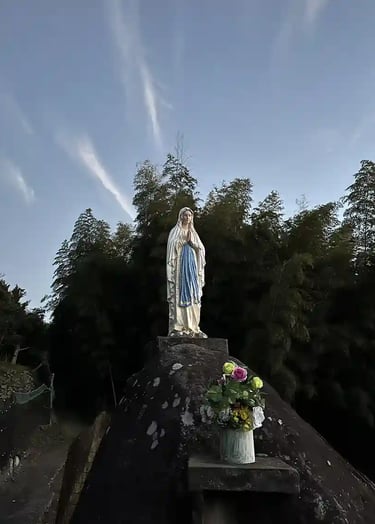
Christian images were disguised as Buddhist statues
Prayers were passed down orally rather than written
Religious rituals were blended with local traditions
Despite intense pressure, the Hidden Christians preserved their beliefs for more than 250 years without priests or direct contact with the outside Christian world.
The Special Importance of Nagasaki
Nagasaki played a central role in the history of the Hidden Christians.
It was one of the earliest regions where Christianity took root, and during Japan’s isolation period, it remained the country’s only port open to limited Western contact. Its geography, with narrow valleys and coastal inlets, allowed communities to gather discreetly and avoid attention.
Because of these factors, Nagasaki became the place where the Hidden Christian tradition survived the longest and most deeply.
The Goto Islands as a Refuge of Faith
Another crucial area for the Hidden Christians was the Goto Islands.
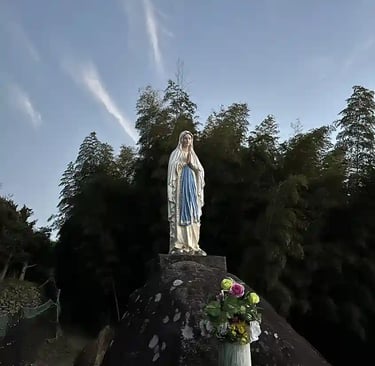
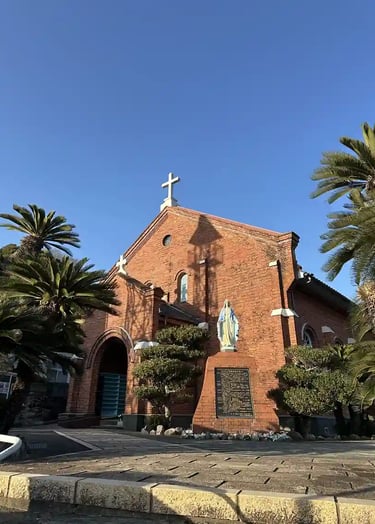
The islands were remote and difficult to access, making them ideal places to escape persecution. Many believers fled from mainland Nagasaki to the Goto Islands, where they lived in small fishing communities and quietly maintained their faith.
After the ban on Christianity was lifted, many churches were built on the islands. Today, these churches stand as powerful reminders of the endurance and devotion of the Hidden Christian communities.
The End of Persecution and the Return to Public Faith
Japan began to reopen to the world in the mid-19th century, and in 1873 the ban on Christianity was finally lifted.
In 1865, a remarkable event took place at Oura Cathedral in Nagasaki. Local believers approached a French priest and revealed that they had secretly maintained their faith for generations. This moment, known as the “Discovery of the Hidden Christians,” astonished the world.
After more than two centuries, Christianity was once again practiced openly in Japan.
What the Hidden Christians Teach Us Today
The story of the Hidden Christians is more than a religious history. It is a story of resilience, memory, and quiet resistance.
Through family ties and close-knit communities, people protected their beliefs under the harshest conditions. Their legacy can still be felt in Nagasaki and the Goto Islands, where faith, culture, and history remain deeply intertwined.
For visitors today, these places offer not only beautiful landscapes, but also a powerful reminder of the strength of human belief and perseverance.
Our company
If you are interested in exploring the history of the Hidden Christians and other cultural heritage sites in Nagasaki, we highly recommend booking a private tour with Nagasaki Private Tours.