

The History of the Japanese Tea Ceremony: From Its Origins to the Present
11/30/20253 分钟阅读
The Origins of Tea in Japan (Nara – Heian Periods)
Tea first arrived in Japan during the Nara period (8th century), brought back from China by envoys and monks. At this stage, tea was valued mostly as a medicinal drink.
By the Heian period, tea began to be enjoyed among aristocrats, and it appeared in court events and ceremonies. However, it remained a luxury reserved for nobles and monks, and had not yet spread to the general population.
The Establishment of Japanese Tea Culture (Kamakura – Muromachi Periods)
In the Kamakura period, the Zen monk Eisai brought tea seeds and preparation methods from China (1191). His book Kissa Yōjōki (“Drinking Tea for Health”) helped popularize tea across the country.
During the Muromachi period, tea gatherings became popular among the warrior class and wealthy merchants. “Tōcha,” a competitive game in which participants guessed the origin of tea, flourished. Tea gatherings of this era were luxurious, decorated with fine Chinese art and ceramics, and symbolized status and wealth.
The Completion of the Tea Ceremony: The Era of Sen no Rikyū (Azuchi–Momoyama Period)
The tea ceremony transformed into a spiritual art during the 16th century under the influence of Sen no Rikyū, who perfected the style known as wabi-cha.
Rikyū emphasized simplicity, restraint, and finding beauty in imperfection. His ideas created the foundation of modern tea ceremony.
Key elements he established include:
Appreciation of simplicity over opulence
Small, humble tea rooms
The spirit of ichigo ichie (“one time, one meeting”)
A harmonious relationship between host and guest
These principles continue to guide the tea ceremony today.
The Edo Period: Spread of Tea Ceremony and Rise of the Schools
During the Edo period, the tea ceremony spread widely, especially among samurai families.
This era also saw the formation of many tea schools, including the three major lineages descended from Sen no Rikyū known as the San-Senke:
Omotesenke
Urasenke
Mushakōjisenke
Each school developed its own style and procedures, while preserving the same underlying philosophy.
Meiji to Showa Periods: Tea Ceremony as a Cultural Refinement
Even after the samurai class disappeared, tea ceremony remained influential.
In the Meiji period, educational institutions began incorporating tea ceremony into their programs.
From the Taisho to Showa periods, it became recognized as a form of etiquette and cultural refinement, especially among women.
This helped tea ceremony spread widely in society and established the foundation for its modern popularity.
The Tea Ceremony in the Present Day: A Global Cultural Tradition
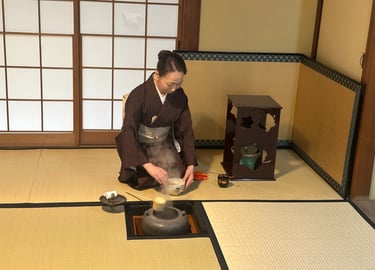
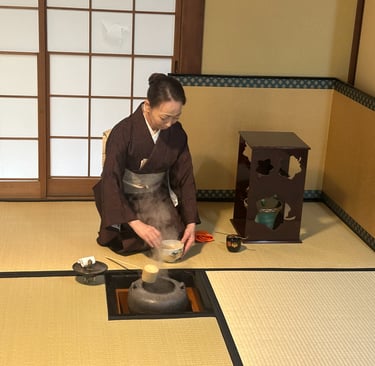
Today, the tea ceremony is appreciated both in Japan and around the world as an opportunity to experience Japanese aesthetics and spirituality.
Modern trends include:
Growing popularity among international visitors
Recognition of tea ceremony as a form of mindfulness
Increased interest from younger generations through matcha cafés
Global expansion of tea schools such as Urasenke
The tea ceremony continues to evolve, balancing tradition with contemporary culture.
Conclusion
The history of the Japanese tea ceremony spans more than 1200 years.
It began simply as a medicinal drink, transformed into an art of beauty and philosophy, and now stands as one of Japan’s most iconic cultural traditions.
Nara–Heian: Tea as medicine and aristocratic culture
Kamakura: Spread through Eisai
Muromachi: Luxurious tea gatherings
Momoyama: Sen no Rikyū establishes wabi-cha
Edo: Spread among samurai and creation of major schools
Modern era: Socially widespread and refined
Today: A global cultural experience